
WELCOME BONUS 300%
UP TO €2000 + 100
FREE SPINS
UP TO €2000 + 100
FREE SPINS
Home → Blackjack
Blackjack at Golden Star Casino: Variants, Rules and Payouts
RNG draws cards from virtual eight-deck shoe
The RNG system utilizes a virtual eight-deck shoe to generate card sequences for standard Blackjack games, establishing the baseline mathematical environment for players seeking fair outcomes. This configuration directly influences the House Edge, which sits at 0.46% when combined with favorable rules like Dealer Stands on Soft 17 and Double After Split availability. Consequently, players relying on strict Basisstrategie can expect an RTP of 99.54%, significantly outperforming tables with less advantageous rule sets or higher deck counts.
Comparing this to single-deck variants reveals that fewer decks typically lower the casino advantage, yet the Eight-Deck version remains popular due to its balance between speed and player odds. While Single Deck offers a superior 0.15% House Edge, it often compensates with punitive 6:5 Blackjack payouts, drastically reducing the overall Return to Player to 98.15%. Therefore, the Eight-Deck option provides a more stable gaming experience with a 0.46% edge, making it suitable for those prioritizing consistent rule structures over marginal statistical improvements.
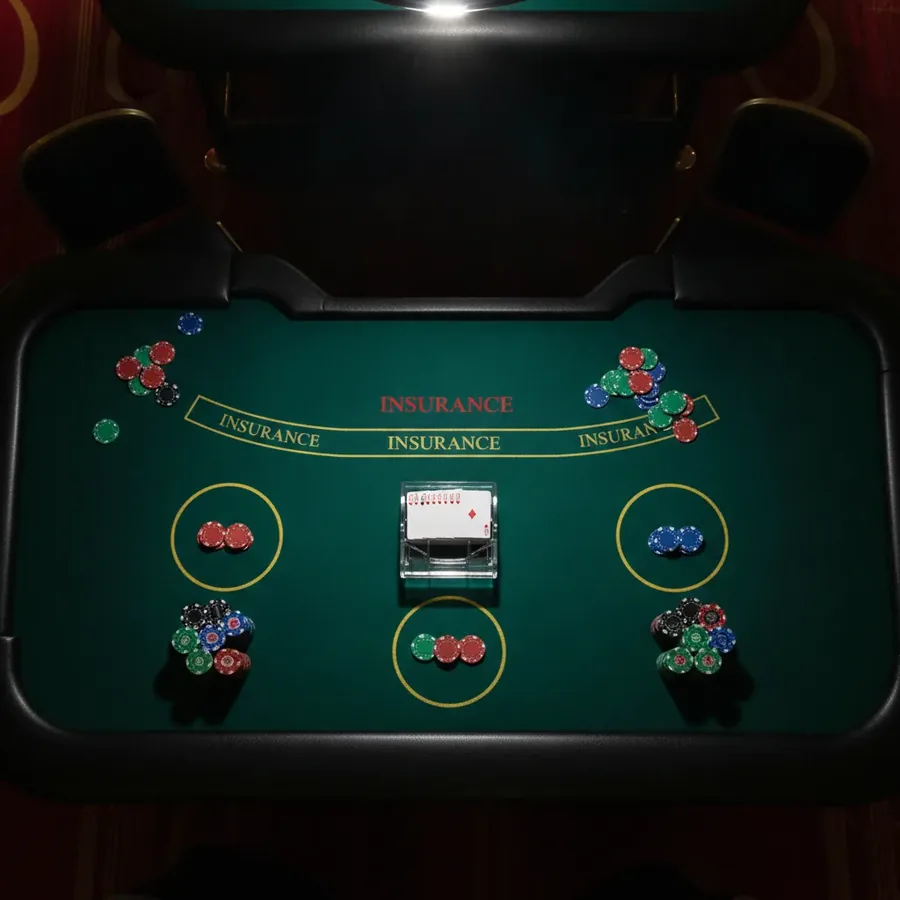
How much time is left for the decision?
Live dealer platforms impose strict time limits on player decisions, requiring actions within specific windows to maintain game flow and ensure fair participation for all connected users. For instance, Quantum Blackjack Plus Live allows bets ranging from 1 to 5,000 EUR, demanding rapid responses to accept or reject Quantum Multipliers up to 1,000x on three-card combinations totaling 21 points. Missing these deadlines results in automatic folds or checks, effectively forfeiting potential winnings and highlighting the pressure inherent in fast-paced live casino environments.
Check table limit before the first bet
Table limits vary significantly across providers, with Evolution's Lightning Blackjack accommodating unlimited players while restricting individual wagers between 1 and 2,500 EUR per hand. In contrast, Playtech's Quantum Blackjack Plus Live caps maximum stakes at 5,000 EUR, offering higher volatility potential for high rollers willing to risk larger sums on each round. Players must verify these boundaries beforehand, as exceeding the maximum bet invalidates the wager and may trigger account reviews, ensuring compliance with the casino's risk management protocols.
Which rule variants does the software show?
Software interfaces display critical rule variations such as Dealer Hits Soft 17, which increases the House Edge by 0.22 percentage points compared to standing variants, directly impacting long-term profitability. Additional modifiers like Resplit Aces improve player odds by 0.08 percentage points, while Double After Split adds another 0.14 percentage points of value to the initial stake. Understanding these nuances allows gamblers to select tables with optimal conditions, minimizing the casino's advantage and maximizing their theoretical return over extended playing sessions.
Chose Wrong Table for 5 EUR Bankroll
Selecting a table with unfavorable rules, such as 6:5 Blackjack payouts, can rapidly deplete a modest 5 EUR bankroll due to the inflated House Edge of 1.85% and reduced RTP of 98.15%. Each winning Blackjack yields only 120% of the stake instead of 150%, eroding funds faster than standard 3:2 tables where the House Edge drops to 0.28% or 0.15%. This disparity means a small bankroll requires significantly more hands to absorb variance, increasing the likelihood of ruin before achieving any substantial profit or hitting a lucky streak.
Blackjack variants at a glance
| Variant | Payout | House edge | Rule | Bet range |
|---|---|---|---|---|
| Blackjack Surrender (Late Surrender) – Regel-Effekt | n.a. (Regel-Modifikator) | −0.08 Prozentpunkte | Spieler gibt Hand nach Dealer-Blackjack-Prüfung auf, verliert die Hälfte des Einsatzes. Verbessert RTP um ca. 0.08 Prozentpunkte. Early Surrender ist wesentlich wertvoller (bis −0.6 Prozentpunkte), aber extrem selten. | Rückzahlung 50% des Einsatzes |
| Blackjack 6 Decks, S17, DAS, DOA, Auszahlung 3:2, Basisstrategie | 99.54% | 0.46% | Dealer steht auf Soft 17; Verdopplung auf jeder Zweierkarte; Verdopplung nach Split erlaubt; keine Aufgabe. Basisstrategie ist für diesen Wert zwingend | Blackjack 3:2, normaler Gewinn 1:1, Insurance 2:1 |
| Blackjack Insurance / Versicherung (6–8 Decks) | 92.53% | 7.47% | Separate Nebenwette bis 50% der Hauptwette, wenn der Dealer ein Ass hat. Basisstrategie schreibt IMMER Ablehnung vor (außer Karten zählen bei True Count ≥ +3). Bei einem Deck Vorteil ≈ 5.88% | Insurance 2:1 |
| Blackjack Ein Deck, klassische Regeln, 3:2 | 99.85% | 0.15% | Weniger Decks = niedrigerer Vorteil; ein Deck gibt ca. −0.48 Prozentpunkte gegenüber 8 Decks. Oft durch 6:5 Auszahlung kompensiert. | Blackjack 3:2, Gewinn 1:1 |
| Blackjack Auszahlung 6:5 statt 3:2 (6 Decks) | 98.15% | 1.85% | Ersatz von 3:2 durch 6:5 fügt exakt +1.39 Prozentpunkte zum Vorteil des Casinos hinzu – stärker als jede andere Regeländerung. Bei $10 Einsatz zahlt Blackjack $12 statt $15. | Blackjack 6:5, Gewinn 1:1 |
| Blackjack Liberal Vegas Strip (liberale Regeln, 3:2) | 99.72% | 0.28% | Günstigste Regelkombination: S17 + DAS + Resplit + Late Surrender. Standardabweichung 1,15 | Blackjack 3:2, Gewinn 1:1 |
One Deck vs Eight Decks in House Edge
The Blackjack Ein Deck variant delivers a house edge of 0.15%, which stands as the most favorable condition among the listed tables. This figure benefits from the single-deck format that reduces the casino advantage by approximately 0.48 percentage points compared to eight-deck games. Players who master basic strategy can therefore retain more capital over the long term than those playing standard multi-deck versions.
Conversely, the standard six-deck table operates with a higher house edge of 0.46% and an RTP of 99.54%. This baseline value assumes strict adherence to optimal strategy while playing on tables where the dealer stands on soft 17. The increased number of decks slightly elevates the mathematical expectation for the operator over thousands of hands.
A drastic deviation occurs when the payout ratio drops from 3:2 to 6:5, pushing the house edge up to 1.85%. This specific rule change adds exactly 1.39 percentage points to the casino advantage, making it far worse than any other single rule adjustment. A $10 wager yields only $12 instead of the expected $15, significantly eroding the player's bankroll.
Highroller from 500 EUR per hand
Quantum Blackjack Plus Live accommodates high-stakes players with a maximum bet limit of 5,000 EUR per round. This upper threshold is double the 2,500 EUR cap found at Lightning Blackjack, offering greater flexibility for serious bankrolls. Evolution also provides a high-limit option at their Party table, capping wagers at 1,000 EUR.
The welcome bonus structure imposes a financial constraint on these high-volume sessions through its contribution rules. Table games contribute only 10% toward the wagering requirement for the 300% welcome bonus up to €2,000. Consequently, placing a 500 EUR bet generates just 50 EUR of progress toward clearing the promotional funds.
This low contribution rate means that highrollers must generate substantially more turnover than slot players to unlock withdrawal rights. While slots count at 100%, requiring minimal volume to clear the bonus, blackjack requires ten times the action. The 5,000 EUR max bet at Playtech remains valid but offers no accelerated path to bonus clearance.
Seat change at the Live Table in 20 seconds
Live dealers facilitate rapid seat transitions without interrupting the ongoing flow of the game for other participants. Quantum Blackjack Plus Live allows players to join or leave the virtual table within seconds of the current round ending. This feature ensures that high-limit players can manage their seating arrangements efficiently between deals.
Evolution’s Lightning Blackjack supports an unlimited number of concurrent players, removing physical seat constraints entirely. Newcomers can insert themselves into the betting phase of the next round immediately after the previous one concludes. The system handles the logistics automatically, maintaining the pace required for fast-paced high-rolling strategies.
Blackjack Party utilizes a dual-moderator format to maintain engagement during these brief intervals between rounds. The seamless transition allows players to focus on strategy rather than administrative delays. No waiting periods are imposed beyond the natural conclusion of the previous hand, ensuring continuous playability for dedicated users.
Which hands are excluded from Surrender?
Late surrender is available only after the dealer has checked for an initial blackjack, protecting the player from immediate loss. In this specific variant, the player may forfeit half their stake if the hand proves unfavorable post-check. Early surrender, which allows quitting before the dealer checks, is excluded due to its extreme rarity and superior player advantage.
The surrender option does not apply to split hands unless explicitly stated, though standard rules often restrict splitting further actions. Resplitting Aces is permitted, but typically limited to receiving only one additional card per new hand. This restriction prevents players from exploiting the surrender mechanic on heavily modified pairs.
Insurance bets remain entirely separate from the surrender decision and carry a distinct house edge of 7.47%. Basic strategy dictates rejecting insurance on all hands except when counting cards indicates a true count of +3 or higher. Accepting insurance unconditionally reduces the overall return to player below acceptable strategic thresholds.
How long does a Live Blackjack round take?
Each live blackjack round concludes once all player decisions are finalized and the dealer resolves their hand. Quantum Blackjack Plus Live introduces quantum multipliers that can award up to 1,000x on three-card 21s, adding slight delay. These visual effects ensure transparency but do not significantly extend the core duration of the deal.
Lightning Blackjack applies lightning multipliers of up to 25x to winning hands, requiring brief verification time. The round length remains consistent with standard live dealer formats, typically lasting under two minutes per hand. The unlimited player capacity ensures that slow decision-makers do not bottleneck the game speed.
Blackjack Party features two moderators who maintain energy levels during the brief pauses between dealing phases. The standard betting window closes precisely when the dealer begins the draw, enforcing strict timing discipline. This efficiency allows high-rollers to complete hundreds of hands per hour, maximizing potential turnover against the 10% contribution rate.
Blackjack Contributes Only 10 Percent to Wagering
Table games contribute only 10 percent toward the bonus turnover requirement, while slots count for 100 percent. This ratio means a €100 bet at the blackjack table generates just €10 of required wagering volume. Players must therefore place ten times more money through the tables to clear the same amount compared to slot play.
The welcome offer includes a 300 percent match up to €2,000 plus 100 free spins, creating a substantial initial bankroll. Because the contribution rate is low, clearing this bonus via blackjack requires significantly higher total action than standard casino norms. The disparity between game contributions drastically alters the cost of converting bonus funds into withdrawable cash.
This structure heavily incentivizes players to utilize the 100 percent contributing slots for meeting wagering targets. Relying solely on table games would demand an impractical volume of bets to unlock the full potential of the deposit match. Strategic allocation of gameplay across different game categories becomes essential for efficient bonus conversion.
Four hours of play with 300 EUR bankroll
A €300 bankroll supports approximately four hours of continuous play at standard live tables like Quantum Blackjack Plus Live. Playtech offers betting limits ranging from €1 to €5,000 per hand, allowing for conservative stake management during extended sessions. This duration assumes average decision speeds and typical variance patterns observed in digital blackjack environments.
Quantum Blackjack Plus Live features quantum multipliers that can reach up to 1,000x on three-card combinations totaling 21 points. These high-variance events introduce significant volatility that can rapidly deplete or expand the stated €300 reserve within minutes. Such multipliers create unpredictable swings that challenge traditional bankroll management strategies based on steady loss rates.
Evolution’s Lightning Blackjack provides multipliers up to 25x on winning hands, offering a different risk profile compared to the Playtech variant. With limits starting at €1 and extending to €2,500, players have flexibility in sizing their exposure relative to their remaining balance. The presence of these side-bet-style multipliers accelerates the consumption of the initial deposit faster than base-game outcomes alone.
Shoe, Cut Card, and 75 Percent Penetration
Most online blackjack variants use six to eight decks shuffled together, directly impacting the effectiveness of card counting strategies. Insurance bets are available as a separate side wager paying 2:1 when the dealer shows an ace, though basic strategy advises against it. This rule increases the house edge by 7.47 percent, making insurance a mathematically unfavorable bet for most players.
The penetration depth determines how many cards are dealt before reshuffling, influencing strategic decisions like true count accuracy. Deeper shuffles reduce the predictive value of previous cards, neutralizing any advantage gained from tracking deck composition.
Variations like Vegas Strip allow resplitting and late surrender, which improve player odds compared to stricter rulesets. Late surrender returns half the bet after the dealer checks for blackjack, reducing the house edge by approximately 0.08 percent. These rule adjustments collectively lower the overall house edge, making certain variants more favorable for skilled players seeking optimal return rates.
Side Bets Increase House Edge to 5 Percent
Insurance wagers pay 2:1 but carry a steep house edge of 7.47 percent in games using six to eight decks. Basic strategy universally recommends rejecting this bet unless the player employs advanced counting techniques with a true count of +3 or higher. For the average participant, accepting insurance guarantees a negative expected value over the long term.
The standalone nature of the insurance bet allows wagers up to 50 percent of the original main bet size. This cap limits exposure while still exposing the player to the disproportionate statistical disadvantage inherent in the side market. Combining insurance with regular play amplifies losses without providing meaningful protection against dealer blackjacks.
Other side bets like those in Quantum Blackjack offer multipliers up to 1,000x, shifting focus from base game strategy to luck-based outcomes. These high-payout options typically carry much higher house edges than the core blackjack mechanics, often exceeding 5 percent depending on the specific multiplier distribution. Players chasing large wins through these features sacrifice consistent return rates for occasional massive payouts.
Early Surrender is removed from many tables
Late surrender permits players to forfeit half their bet after the dealer verifies they do not hold a natural blackjack. This rule reduces the house edge by roughly 0.08 percent, offering a minor but valuable advantage in specific scenarios. Its availability varies significantly across different software providers and table configurations.
Early surrender, which allows forfeiture before the dealer checks for blackjack, is far more valuable, potentially lowering the house edge by up to 0.6 percent. However, this rule is extremely rare in modern online casinos due to its significant impact on player profitability. Most platforms have replaced it with less advantageous alternatives or removed surrender capabilities entirely.
The absence of early surrender forces players to rely on standard basic strategy without the safety net of pre-check surrender options. This restriction increases the overall cost of playing compared to land-based venues where such rules might still exist. Understanding which tables offer late versus no surrender is critical for minimizing the house advantage in digital environments.
Contact
Live - online chat
Banking









Providers









Golden Star Casino 2026